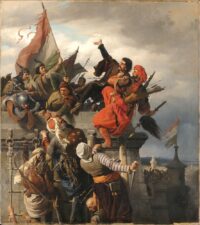
In the summer of 1456, waves rolled through the sea of grain in the southern Hungarian Vojvodina. No wind moves them, but the trembling of thirty thousand boots. In marching step, their soles crush the stalks. Banners and flags flutter to the horizon: blood-red and snow-white stripes gleam in the sun, forming the old coat of arms of the Árpáds, the first kings of Hungary. Beside it, the double cross—inheritance from Byzantine times, when the sons of the Pannonian Basin married the purple-born imperial children from the Bosporus.
But Byzantium has fallen. The Theodosian Walls, which defied every attack, every conquest for over a thousand years, collapsed amid cannon thunder and “Allahu akbar!” cries. The largest and most beautiful church in the world—converted into a mosque. The old imperial palace—seat of the Sultan. The ringing of bells has given way to the muezzin’s call.
Three years have passed since then. Three years in which the Ottomans under their Sultan Mehmed II ravaged the Balkans. After Constantinople, the Golden Apple, fell into Muslim hands, Belgrade appears as the next worthwhile conquest.